
You watched the weather all week. A hurricane made landfall on the Gulf Coast, weakened over Alabama, and by the time it reached Carrollton it was “just” a tropical depression. The wind howled for hours, and now the sun is out and your yard is full of branches. Your roof looks fine from the driveway. Is it?
Maybe not. Tropical storm roof damage rarely announces itself with a gaping hole. More often the wind loosens shingles, breaks sealant bonds, and opens small paths for water that show up as ceiling stains weeks later. The direct answer: after any tropical system crosses Carroll County, do a careful ground-level check within a day or two, photograph anything suspicious, and bring in a professional if you spot even one warning sign. This roof inspection after storm Georgia guide walks you through how to do that safely, what hidden damage looks like, and how to protect yourself with your insurer and against out-of-town storm chasers.
If you would rather have experienced eyes on it, All Seasons Roofing Inc. has served Carrollton and west Georgia for more than 30 years, and a free estimate and post-storm inspection costs you nothing but a phone call. A roof inspection after storm Georgia homeowners can act on starts with someone up close, not a guess from the driveway. No pressure, just an honest report.
Carroll County sits about 250 miles from the Gulf, which sounds like a comfortable buffer. It is not. Systems that come ashore on the Gulf Coast often track northeast across Alabama into west Georgia while still carrying tropical storm force gusts, and our area frequently feels them before the Atlanta metro does. Irma in 2017 and Zeta in 2020 both cut power and peeled shingles across this region long after losing their hurricane names. The National Weather Service warns that damaging wind, tornadoes, and flooding from tropical systems routinely reach hundreds of miles inland. That inland reach is why a roof inspection after storm Georgia weather calls for is not just a coastal habit.
Hurricane remnants Georgia receives from the Gulf also behave differently than a summer thunderstorm. Instead of a violent twenty-minute burst, you get six to twelve hours of sustained wind that works on your roof like a crowbar, flexing shingle edges until adhesive seals fail. Georgia shingles are already worked hard by heat and UV exposure long before a tropical system arrives, which leaves those seals with less to give. Add saturated ground and you get falling limbs and whole trees too. That long-duration stress is why a roof inspection after storm Georgia sends inland is worth doing even when the system arrives with its hurricane name already stripped away.
Before you inspect anything, take this seriously: do not climb onto your roof after a storm. Wet shingles are slick, gusts linger behind these systems, and hidden damage can make decking spongy underfoot. Falls injure far more homeowners after storms than the storms themselves. Everything in the checklist below can be done from the ground, a window, or your attic, because a safe roof inspection after storm Georgia homeowners handle themselves never involves a ladder.
Stay well away from downed power lines and anything touching them. If a tree has hit the house, keep everyone out of the rooms beneath it until a professional confirms the structure is sound. If you smell gas or see a sagging ceiling, leave and call for help first. Ready.gov has a full rundown of post-storm hazards worth five minutes of your time before you begin any roof inspection after storm Georgia weather leaves behind.
Work through these three zones, camera in hand, and photograph anything that looks off, even if you are not sure it matters. A ground-level roof inspection after storm Georgia calls for about twenty minutes.
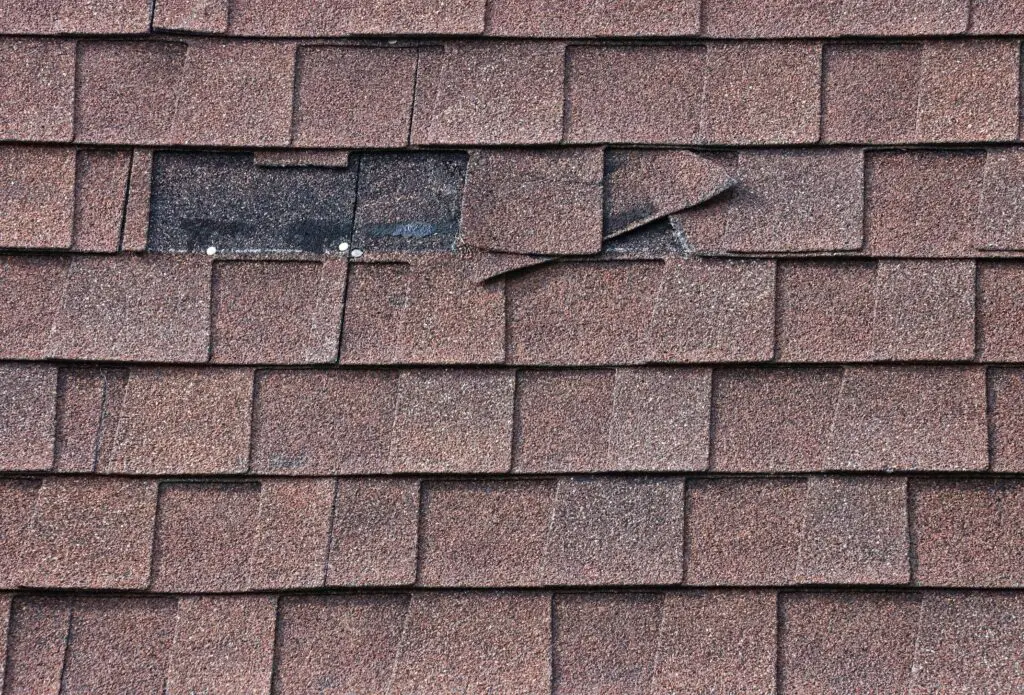
Every roof inspection after storm Georgia starts here. Circle the house slowly and study the roof from every side. Binoculars help. Look for missing shingles, lifted or curled edges, creased tabs, and dark patches where granules have been stripped away. Check the metal too: chimney flashing, vent boots, and drip edge that looks bent or separated. Then look down. Shingle fragments and piles of granules in the yard are direct evidence your roof shed material in the wind. Note where each pile sits, because it points the next roof inspection after storm Georgia toward the slope that took the worst of it.
Sagging or detached gutters tell you the wind loaded them beyond their fasteners. Granules collecting at downspout exits mean your shingles lost protective surface, which shortens their life. Look under the eaves for soffit panels that are cracked, hanging, or pushed out of place, where wind-driven rain enters and soaks insulation unseen. Gutters and soffits are the two zones a quick roof inspection after storm Georgia most often skips.
Get into the attic with a flashlight within a day of the storm, then again after the next hard rain. Look for damp insulation, dark streaks on the decking, pinpoints of daylight, and any new musty smell. Inside the house, scan ceilings and wall tops for fresh stains, bubbling paint, or damp spots around light fixtures. Interior evidence often appears before exterior damage becomes obvious, and catching it early keeps a repair from becoming a mold problem. The attic is the single most useful stop on any roof inspection after storm Georgia checklist.
The most expensive tropical storm roof damage is the kind you cannot see from the driveway. Wind lifts a shingle, breaks the sealant strip underneath, and lets it lie back down flat. It looks fine until the next heavy rain drives water under it. Creased shingles carry a fold line that weakens the mat and fails months later. Nails back out slightly when decking flexes, leaving raised heads that puncture the shingles above them. None of that turns up in a roof inspection after storm Georgia done from ground level alone.
Hidden tropical storm roof damage is exactly why a professional roof inspection after storm Georgia matters even when your own check comes up clean. A trained roofer can find broken seals, creases, and flashing separation by hand and document them properly. All Seasons Roofing provides written findings with photos, whether the verdict is “you are fine” or “this needs attention,” and you can see the standard of their work in the project gallery.
If you find damage, documentation is everything. Photograph before you touch anything: wide shots of each slope, close-ups of damaged areas, debris in the yard, and interior stains. Note the storm date, because insurers match storm damage Carroll County claims against verified weather records. The Georgia Emergency Management and Homeland Security Agency (GEMA) tracks major weather events statewide, useful context after a big system. Pair those records with a written roof inspection after a storm Georgia report and your file gets much harder to argue with.
Make reasonable temporary repairs to prevent further damage, such as tarping a leak, and keep every receipt, since policies generally cover those costs. Report the claim promptly rather than waiting to see if a leak worsens, because delays give insurers room to argue neglect. Get an independent roof inspection after storm Georgia report from a local roofer before the adjuster visit so you can compare findings. All Seasons Roofing will give you an honest read on your claim and the steps that make sense for your roof, which the team covers in more detail on the FAQ page. Storm damage Carroll County claims also spike all at once after a tropical system, so filing early puts you nearer the front of the adjuster’s line. If the repair lands above your deductible comfort level, financing options can spread the cost out.
Within days of any widely reported storm, out-of-town crews start knocking on doors across west Georgia. Some are legitimate. Many are not. Be cautious with anyone who shows up uninvited, pressures you to sign on the spot, asks for a large deposit up front, or offers to “cover your deductible.” Ask for a local physical address, proof of license and insurance, and references you can actually call. Ask them to put their roof inspection after storm Georgia findings in writing with photos, and watch how many decline. A contractor who will still be in Carrollton next year has every reason to stand behind the work. A crew heading back out of state has none.
This is where hiring local pays off in plain terms. All Seasons Roofing Inc. is a family-owned roofing contractor serving Carrollton, Bremen, Temple, Villa Rica, Douglasville, and the surrounding west Georgia communities with residential roofing, repairs, and emergency roofing services. The company is licensed and insured and backs its work with a 5-year labor warranty on top of the manufacturer’s warranty on materials, which typically runs from 20 years up to a lifetime depending on the shingle you choose.
Tropical season in Georgia runs into November, and the next round of remnants is a matter of when, not if. Whether you spotted something worrying on your walk-around or simply want a professional baseline, the team at All Seasons Roofing has spent three decades giving west Georgia homeowners straight answers. A roof inspection after storm Georgia homeowners can trust is one phone call away. Reach out for your free inspection and put the question to rest, one way or the other.
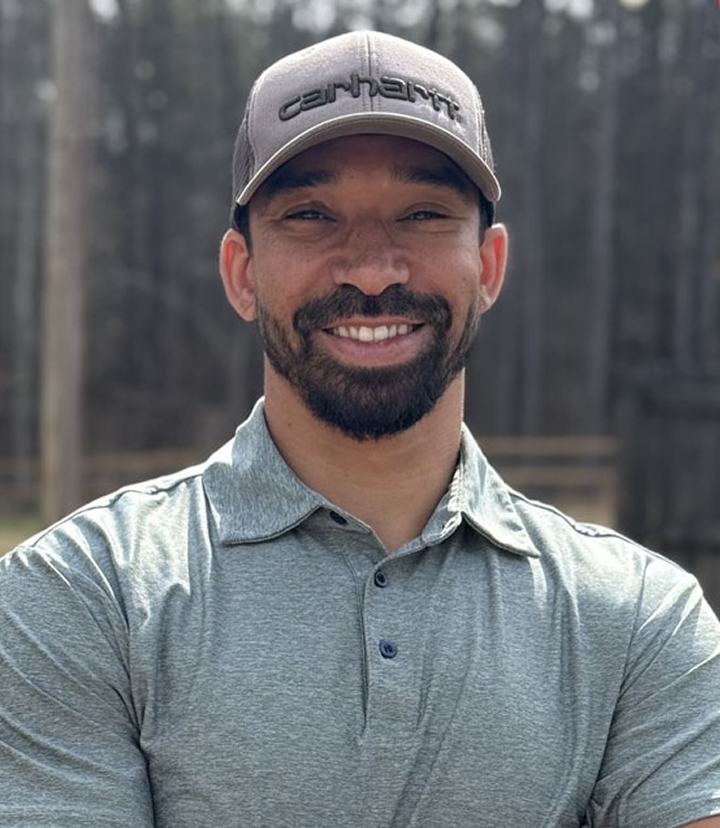
Kail Singleton is taking over the reins at All Seasons Roofing Inc., the family roofing company his father founded, and he works side by side with him on projects across the region. Based in Carrollton, Georgia, All Seasons Roofing serves homeowners and businesses across West Georgia and East Alabama, including Temple, Bremen, Douglasville, and Villa Rica. The company handles roof repairs, full replacements in asphalt shingle, metal, tile, and cedar shake, new construction roofing, storm inspections, and emergency service, with an emphasis on Class 4 impact-resistant materials built to stand up to hail. Drawing on the company’s thirty years of roofing experience, Kail believes in honest answers over sales pressure: if a roof only needs a repair, that is exactly what the team will recommend. He stays directly involved in every job to keep quality standards high.